
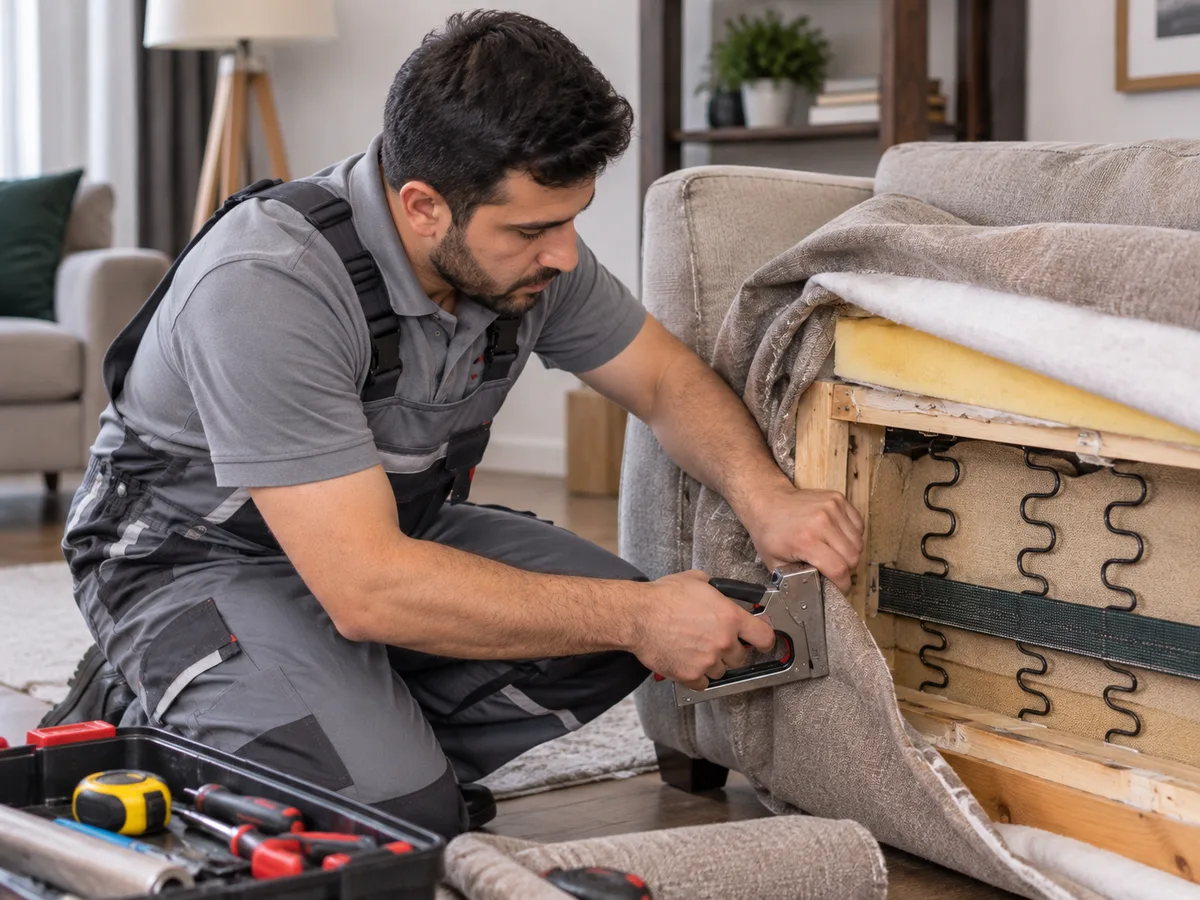
Since a sofa is a piece of furniture that is used daily and for long periods, problems such as sagging seats, squeaking, a loose frame, deformed foam, and worn upholstery can develop over time. Correctly identifying the problem helps determine which part of the sofa needs repair.
One of the most important parts of a sofa is its frame. Since the frame supports the entire structure, looseness or damage can directly affect the sofa's strength and stability.
With prolonged use, the joints of a wooden frame may become loose, while wooden components may crack or break. If the sofa moves, bends, or squeaks when someone sits on it, the condition of the frame should be inspected.
When there is a frame problem, simply reinforcing the visible damaged section may not always be enough. Joints, supports, and other load-bearing parts should also be checked.
Another possible cause of a sagging seat is a faulty spring system. If one of the springs breaks, becomes loose, or moves out of position, the seating surface may begin to sag unevenly.
A sofa with spring problems may produce metallic noises or squeaking, or a particular area may feel excessively soft when sitting. In some cases, replacing the damaged spring is sufficient, while in others, more extensive repair of the spring system may be required.
Another component that directly affects sofa comfort is the foam. With prolonged use, foam can lose its elasticity, sag, and fail to return to its original shape.
If only one section of the foam has collapsed, there may be a noticeable difference in height across the seating surface. In this case, the condition of the foam, springs, and frame underneath should be checked together.
When replacing foam, attention should be paid not only to its thickness but also to its density and intended use. Foam that is too soft or unsuitable for the sofa may quickly lose its shape again.
The foam in the backrest and armrests can also become deformed over time. Restoring these areas can improve both the comfort and appearance of the sofa.
Another common problem is worn or damaged upholstery. Fabric or other upholstery materials may develop tears, stains, fading, and signs of wear.
When replacing the upholstery, the environment and frequency of sofa use should be considered. For a sofa that is used intensively every day, choosing a durable and easy-to-clean material may be more suitable.
When selecting new upholstery, not only the color and design but also the durability, texture, and maintenance requirements of the material should be considered.
Replacing the sofa upholstery also provides a good opportunity to inspect the condition of the internal foam, springs, and frame, as the old material is removed during the process. This allows hidden problems to be identified before the new upholstery is installed.
If the sofa squeaks, the springs may not always be the cause. Loose frame joints, wooden components rubbing against each other, or loose mechanisms can also create noise.
Mechanism problems can also occur in sofa beds and other convertible sofas. If the mechanism is difficult to open, gets stuck, becomes bent, or does not close properly, its connections and moving components should be inspected.
If the sofa legs become loose, the structure may become unstable and place additional stress on the frame. Checking the legs and their mounting points in time can help prevent more serious frame damage.
Before starting repairs, it is important to assess the overall condition of the sofa. In some cases, replacing only the upholstery may be sufficient, while older sofas may require the frame, springs, and foam to be restored together.
A professional furniture repair technician can inspect the sofa's frame, spring system, foam, upholstery, and mechanisms to determine the exact source of the problem.
Proper sofa repair can restore the comfort and appearance of the furniture while also helping extend the service life of the existing structure.