
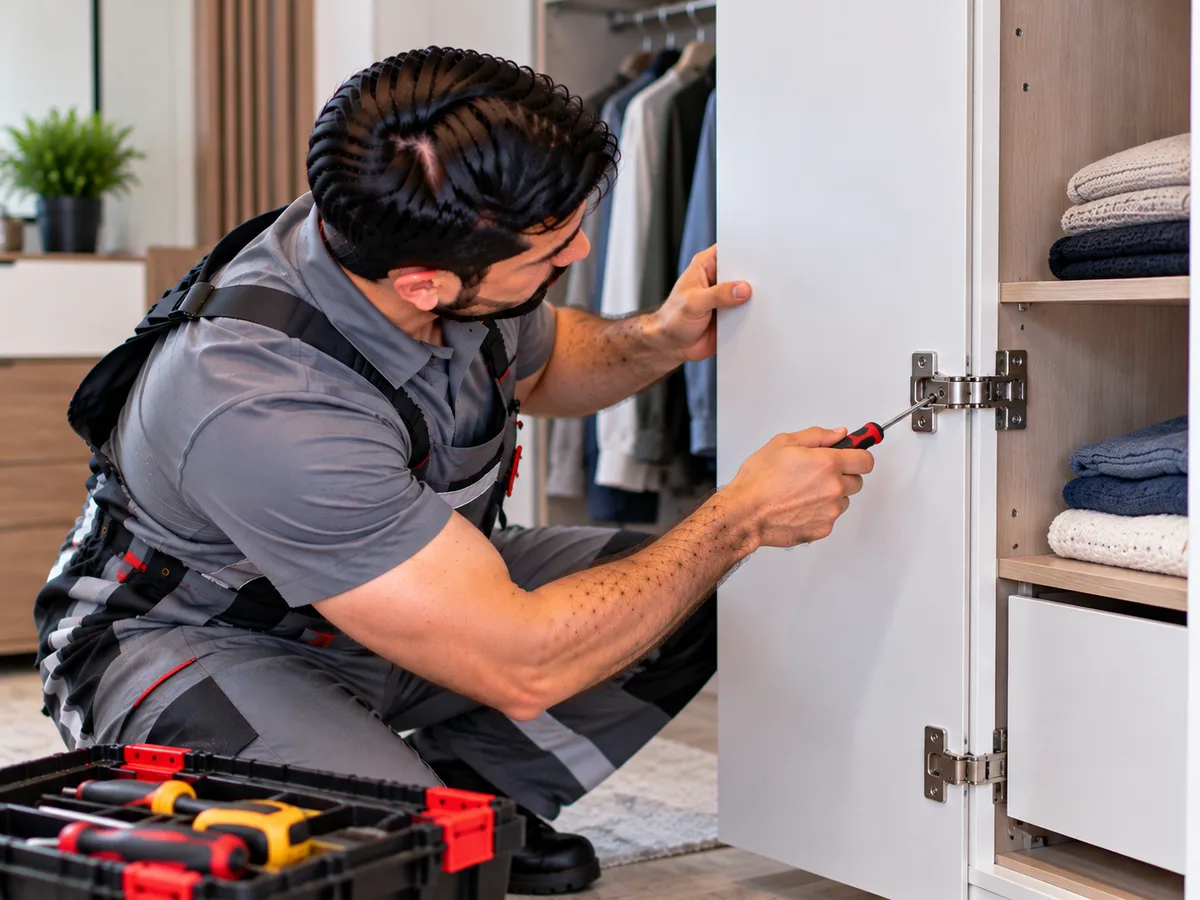
A broken or malfunctioning cabinet hinge is one of the most common furniture problems. Sometimes a cabinet door sags, does not close properly, or makes noises when opening and closing. These problems may be related to hinge wear, breakage, or loose mounting components.
Why do cabinet hinges break? Hinges can wear out after prolonged use. Frequent opening and closing of the door, excessive weight, and poor-quality mechanisms can cause a hinge to fail.
Loose hinge mounting screws can also cause a cabinet door to sag. When the screws become loose, the hinge shifts out of position, and the door no longer stays properly aligned. In some cases, tightening the screws and adjusting the hinge can solve the problem.
How do you replace a broken cabinet hinge? First, you need to determine the type and size of the old hinge. Furniture uses hinges of different sizes, opening angles, and mounting systems. The new hinge should be selected according to the cabinet's construction.
When replacing a hinge, the cabinet door should be securely supported before removing the mounting screws from the old hinge. The damaged mechanism is then removed, and a suitable new hinge is installed in its place.
Proper installation of the new hinge is essential for the smooth operation of the cabinet door. If the hinge is installed incorrectly, the door may become misaligned, touch an adjacent door, or fail to close completely.
If the hinge mounting area is damaged, simply installing a new hinge may not be enough. Especially in furniture made from particleboard and MDF, screw holes can become enlarged, weakening the connection. In such cases, an appropriate repair method should be selected.
Adjusting the cabinet door is one of the main steps after replacing a hinge. Many modern hinges allow the door to be adjusted from side to side, up and down, and closer to or farther from the cabinet frame.
When the adjustment is performed correctly, the cabinet door opens and closes smoothly, the gaps between the doors become even, and additional stress on the hinges is reduced.
Kitchen cabinet hinges may deteriorate over time due to moisture, steam, and daily use. It is especially important to check the condition of hinges on doors that are opened and closed frequently.
Some cabinets use hinges with a soft-close feature. These mechanisms prevent the door from slamming shut. When choosing a new hinge, the characteristics of the existing system should be taken into account.
Can you replace a cabinet hinge yourself? Replacing simple hinges may be possible if you have the appropriate tools and the correct replacement part. However, if the door is heavy, the screw holes are damaged, or the new hinge does not fit properly, it is better to seek professional assistance.
If a hinge is broken, forcing the cabinet door open or closed is not recommended. Doing so may damage other hinges and cause the furniture material to break apart.
When should you call a furniture repair technician? If the cabinet door is severely sagging, the hinge mounting area is broken, or the door still does not close properly after adjustment, a technical inspection may be necessary.
A professional furniture repair technician can inspect the condition of the hinge, screw holes, door weight, and furniture construction to determine the most suitable repair or replacement method.
Choosing the correct hinge and ensuring professional installation can help restore the cabinet door's normal operation, prevent further damage, and extend the lifespan of the furniture.