
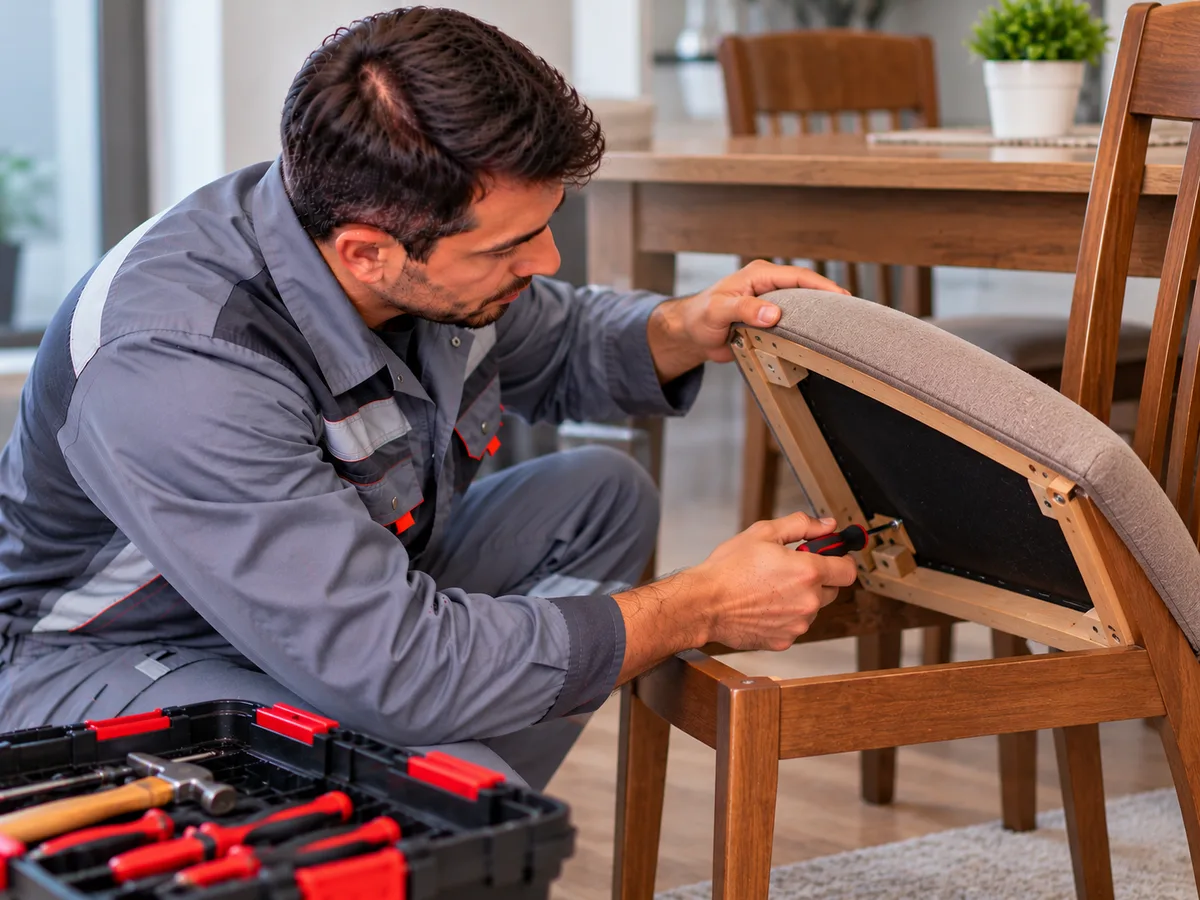
Chairs are among the most frequently used pieces of furniture in homes, offices, restaurants, cafés, and other spaces. Over time, a chair seat may become loose, start wobbling, shift out of position, or develop weakened connections between the seat and the frame. Although this problem may initially cause only minor discomfort, failing to address it promptly can lead to the seat becoming completely detached, cracks developing in wooden components, and reduced safety when using the chair. When repairing a chair seat, fastening screws, wooden joints, the metal frame, the seat base, and other structural components should be inspected. A professional furniture repair technician can identify the cause of the problem and apply suitable tightening, gluing, reinforcement, or replacement methods.
Why does a chair seat become loose? The main causes of a loose chair seat include prolonged use, weakened fastening screws, worn wooden joints, damage to the seat base, and reduced structural strength of the frame. Repeated pressure and movement during everyday use affect the connection points between components. As a result, screws may gradually loosen, glued joints may separate, and the seat may lose stability. The exact cause depends on the chair's construction and the conditions in which it is used.
How can you tell if a chair seat is loose? Common signs include the seat moving from side to side when someone sits down, the front or rear section lifting, creaking noises, and the seat no longer remaining securely attached to the frame. In some cases, the seat moves only in a particular direction. In other situations, the entire seat assembly may begin separating from the frame. If these symptoms appear, the chair should no longer be used until its connections have been inspected.
What should you do first if a chair seat becomes loose? First, stop using the chair and determine which part of the seat has become loose. Place the chair on a stable surface and inspect the screws underneath the seat, the connection points, and the condition of the frame. If visible cracks, broken components, or separated joints are found, do not place weight on the chair. It is important to determine whether the problem is caused only by loose fasteners or by structural damage.
Why do chair seat screws become loose? During everyday use, the screws connecting the seat to the frame may loosen because of repeated movement and loading. This problem is particularly common in chairs that are frequently moved, dragged across the floor, or used intensively. Incorrect screw selection, excessive tightening during previous repairs, or enlarged screw holes can also weaken the connections.
How do you tighten loose chair seat screws? A furniture repair technician first examines the fastening screws located underneath the seat. If the screws are in good condition and the holes are not damaged, they can be tightened properly using an appropriate tool. However, if a screw hole has become enlarged, simply tightening the screw again may not provide a lasting solution. In such cases, the hole should be repaired using a suitable method, or a new fastening component compatible with the chair's construction should be installed. Overtightening screws can cause wooden parts to crack.
What should you do if a chair seat screw hole has become enlarged? When a screw hole becomes enlarged, the screw loses its original holding strength, which can cause the seat to become loose again. This problem is especially common in seats made from particleboard, MDF, and softwood. Depending on the condition of the material, a suitable wood repair technique, specialized fastener, or another joining method compatible with the chair's construction may be used. Installing a larger screw in a damaged hole is not always the correct solution because it may cause cracking or further weakening of the material.
How do you repair a loose wooden chair seat? In wooden chairs, a loose seat is usually associated with weakened screw connections or glued joints. A furniture repair technician first determines how the seat is attached to the frame. In screw-fastened connections, the fastening components are inspected, while in glued joints, the condition of the separated parts is evaluated. If necessary, the joints are disassembled, cleaned, reassembled using suitable furniture glue, and held securely in position until the connection has regained sufficient strength.
Why do glued joints in wooden chairs separate? Some wooden chair components are joined using specialized furniture glue. Over time, prolonged use, changes in humidity, repeated loading, and material aging can weaken these glued connections. As a result, the components between the seat and the frame may begin moving. In such cases, simply applying new glue over old adhesive does not always create a strong connection. The bonding surfaces must be properly prepared, and the repair should be performed according to the characteristics of the material.
Can a chair seat be repaired using furniture glue? In some wooden joints, suitable furniture glue can restore the strength of the connection. However, glue is not appropriate for every chair design. If the seat is secured with screws or metal fasteners, using glue alone may not be sufficient. During the bonding process, it is important to ensure that the surfaces are clean, the components are correctly positioned, and the adhesive is allowed to cure for the period specified by its manufacturer.
What should you do if the wood underneath a chair seat is cracked? When the wooden or plywood section beneath the seat develops a crack, the load-bearing capacity of the structure may decrease. Minor damage that does not affect essential load-bearing components may sometimes be repaired using suitable reinforcement methods. However, deep cracks, destroyed fastening points, or serious damage to structural components may require replacement. In such situations, simply tightening the screws is not considered a safe or reliable repair method.
How do you repair broken plywood in a chair seat? In plywood chair seats, prolonged loading, moisture, and material aging can cause cracks and breakage. If the plywood is severely damaged, a furniture repair technician may manufacture a new base according to the seat's dimensions, shape, and fastening points. The replacement plywood must have an appropriate thickness and meet the structural strength requirements of the chair. If the seat has soft upholstery, the covering material and foam should also be inspected.
What should you do if a chair seat separates from the frame? When a chair seat becomes detached from its frame, the first step is to determine whether the connection points have been damaged. In some cases, screws simply come out of their holes, while in others, wooden or metal fastening components are damaged. During repair, the seat must be positioned correctly, the fasteners restored, and the structural integrity of the frame checked. If the frame is damaged, simply reattaching the seat may not completely solve the problem.
How do you repair a loose chair seat with a metal frame? In chairs with metal frames, the seat is usually secured using screws, bolts, or specialized fastening mechanisms. When these components loosen, the seat may begin moving. A furniture repair technician checks the condition of the bolts, screws, metal mounting plates, and frame. Damaged or unsuitable fastening components may be replaced. If the metal frame has developed a crack or a welded joint has broken, additional structural repair may be necessary.
What should you do if a metal fastening component on a chair breaks? When a metal mounting plate, bracket, or connecting component breaks, the seat may lose stability. In this situation, it is necessary to determine the type of damaged component and the load it supports within the structure. If a suitable replacement part is available, it may be replaced. If a primary load-bearing section of the frame is damaged, the safety of any proposed repair must be evaluated separately. In some cases, removing the chair from use may be the more appropriate option.
How do you repair a loose upholstered chair seat? In upholstered chairs, foam and covering materials are placed over the seat base. Looseness in these seats may be caused by fastening screws underneath the seat, damage to the plywood base, or weakened frame connections. During repair, the seat structure is inspected, and if necessary, the upholstered section is carefully removed to restore the base. If the upholstery fabric remains in good condition, it may be reused after the repair.
What should you do if a kitchen chair seat becomes loose? Kitchen chairs are used frequently, so their seat fasteners may weaken over time. Loose screws, wear in the seat base, and damaged connection points are particularly common in wooden and metal-framed kitchen chairs. During repair, the underside of the chair is inspected, the fastening components are restored, and the stability of the seat is evaluated. The overall condition of the frame should also be considered to reduce the likelihood of the problem recurring.
How do you repair a loose office chair seat? In office chairs, the seat is usually attached to a metal mechanism using bolts and specialized fastening components. A loose seat may be associated with weakened bolts, damage to the seat base, or wear in the mechanism. A furniture repair technician examines the connections between the seat and the mechanism. If the problem involves only the fasteners, they may be repaired appropriately. However, if the seat's supporting mechanism or a major metal component is damaged, the affected part may need to be replaced.
Why do chair seats in restaurants and cafés become loose quickly? Chairs in restaurants and cafés are used by many people throughout the day. Frequent repositioning, dragging across floors, and repeated loading can weaken the seat connections. Screw-fastened and glued joints may become particularly vulnerable over time. In these establishments, regular chair inspections, timely repair of loose fasteners, and removing damaged furniture from service are important safety measures.
Why does a chair seat wobble? A wobbling chair seat may be caused by loose screws, separated wooden joints, deformation of the frame, or damage to the seat base. Sometimes the problem is not in the seat itself but in the chair legs or overall frame. Therefore, simply tightening the seat may not be sufficient. A furniture repair technician should inspect the entire chair structure to identify the source of instability.
Why does a chair seat creak? Creaking noises when sitting on a chair may result from friction between wooden joints, loose screws, a weakened frame, or movement of the seat base. In some cases, the noise comes from the chair legs or metal fastening components. Tightening random fasteners or applying glue without identifying the source of the noise may not solve the problem. Every connection point should be inspected during the repair process.
What should you do if one side of a chair seat lifts up? If only one side of the seat lifts, the cause may be a loose fastening screw in that area, a damaged screw hole, or incorrect alignment of the frame. First, all fastening points of the seat should be inspected. Excessively tightening the fastener on only one side may cause the seat to become distorted and damage other joints. Therefore, fastening should be performed after the seat has been correctly positioned and the structure inspected.
Can a chair seat be repaired if it has completely detached? Complete separation of the seat does not always mean that the chair is beyond repair. If the frame is sound and the fastening points can be restored, the seat may be reinstalled. However, if wooden components are broken, metal connections are damaged, or the primary load-bearing structure has weakened, additional repair or component replacement may be required. Whether the chair can be restored depends on its material and the extent of the damage.
Can a chair seat be reinforced with additional metal corner brackets? In some wooden chair designs, suitable metal corner brackets or specialized fastening components can be used to strengthen the joints. However, this method is not suitable for every chair. Incorrect installation of metal fasteners may cause the wood to crack, change the shape of the seat, or introduce additional stress into the structure. The reinforcement method should be selected according to the chair's material, dimensions, and load-bearing characteristics.
How do you repair a loose wooden chair frame? A loose wooden frame may result from weakened connections between the legs, side supports, and components that support the seat. In this situation, simply tightening the seat screws is not enough. A furniture repair technician examines the frame joints, disassembles the relevant components if necessary, removes old adhesive residue, and rejoins the parts using a method appropriate for the structure. Proper clamping and sufficient adhesive curing time are essential for restoring the strength of the connections.
Can loose chair legs affect the seat? Yes, loose chair legs can affect the stability of the entire structure. When the connections between the legs and the frame weaken, the chair may wobble during use, and the resulting movement can contribute to the seat becoming loose. In such cases, the legs, side supports, and frame joints should be inspected along with the seat. Otherwise, the chair may remain unstable even after the seat has been repaired.
What materials are used to repair a chair seat? Depending on the chair's construction, suitable screws, bolts, wood repair materials, furniture glue, metal fastening components, or a new seat base may be used. When plywood or wooden components need to be replaced, the thickness and strength of the materials must be considered. Every repair material should be compatible with the chair's construction. Incorrectly sized or poor-quality fasteners can cause the problem to return quickly.
Can you repair a chair seat yourself at home? If the problem involves only slightly loosened, accessible fastening screws and there are no cracks or broken components in the structure, the user may inspect the screws with an appropriate tool. However, if the screw holes are damaged, the seat base is cracked, the frame is loose, or metal components are broken, professional repair may be required. Working on the load-bearing components of a chair requires particular attention to safety.
What mistakes should you avoid when repairing a chair seat? One of the most common mistakes is overtightening loose screws. This can cause the wood to crack and the screw hole to become even larger. Other mistakes include using unsuitable adhesive, fastening components without checking for damage, and ignoring cracks in the frame. The main purpose of the repair is not simply to stop the seat from moving but to restore the safety of the entire structure.
Can a chair seat become loose again after repair? Yes, if the underlying cause of the problem has not been fully addressed, the seat may become loose again after some time. For example, reinstalling the same screw into an enlarged hole or applying adhesive only superficially to a weakened wooden joint may not provide a lasting result. Therefore, the overall condition of the fastening components, frame, and seat base must be considered during repair.
When should a chair seat be completely replaced? If the seat base is severely cracked, the plywood is broken, the fastening points have been completely destroyed, or the material has lost its original strength, replacing the seat may be more appropriate. When manufacturing a new seat, the chair's dimensions, shape, frame connections, and load-bearing requirements must be considered. For upholstered models, the condition of the covering material and foam should also be evaluated.
How long does it take to repair a chair seat? The repair time depends on the type of problem and the extent of the damage. Simple screw tightening can be completed relatively quickly. However, disassembling and gluing wooden joints, restoring the frame, or manufacturing a new seat base requires more time. When adhesive is used, the time required for complete curing must also be considered. The chair should only be used again after its joints have achieved the necessary strength.
What determines the cost of chair seat repair? The repair cost may vary depending on the type of chair, materials used, number of damaged components, and complexity of the required work. Simply tightening screws and completely replacing the seat base involve different amounts of work. Restoring a wooden frame, replacing metal fasteners, and removing an upholstered seat may require additional procedures. The exact cost can be determined after the problem has been assessed.
How can you prevent a chair seat from becoming loose? Using chairs correctly, avoiding loads beyond their intended capacity, not rocking back on chairs, and periodically checking fastening components can help reduce the risk of loosening. Keeping wooden chairs in high-humidity environments for extended periods may negatively affect their joints. In restaurants, cafés, and offices where furniture is used intensively, regular inspections and timely repairs of loose components are particularly important.
How does a furniture repair technician identify the cause of a loose chair seat? A professional furniture repair technician first examines the chair's material, construction, and the method used to attach the seat to the frame. The screws, bolts, wooden joints, metal components, and seat base are then evaluated. The technician determines whether the problem is caused by ordinary fastener loosening, material wear, or structural damage. Based on the diagnosis, an appropriate method of tightening, joint restoration, structural reinforcement, or component replacement is selected.
How does a furniture repair technician repair a chair seat? During the repair process, damaged and weakened connections are identified first. If necessary, the seat is separated from the frame, the fastening points are cleaned, and damaged components are inspected. Screw holes may be repaired, suitable fastening components replaced, wooden joints reglued, or the seat base renewed. After the repair is completed, the chair's overall stability and the strength of its connections are checked.
What inspections are performed after chair seat repair? After the repair, the technician checks whether the seat is properly secured to the frame, whether the joints remain stable, whether the legs are balanced, and whether any cracks are present in the structure. When the seat is checked by hand, there should be no looseness or unusual movement. However, a visual inspection or simple movement test alone does not always fully confirm structural safety. Particularly in severely damaged chairs, additional professional assessment may be necessary before the chair can be used safely.
When should you call a furniture repair technician for a loose chair seat? If the seat continues to wobble, screws no longer hold securely in their holes, wooden components are cracked, metal fasteners are broken, or the frame has lost stability, a professional furniture repair technician should be consulted. If a previously repaired chair becomes loose again, the underlying cause should be investigated more thoroughly. Timely repair is especially important for chairs used in restaurants, cafés, and offices, where the condition of the furniture directly affects user safety.
Furniture repair technician services for chair seat restoration may be needed in Baku, Sumgayit, Khirdalan, Masazir, and Absheron. When repairing wooden chairs, metal-framed chairs, kitchen chairs, office chairs, and restaurant furniture, the repair method should be selected according to the type of damage. The chair's material, the condition of its fastening components, and its structural design affect whether a repair is possible and how much work is required.
A loose chair seat may result from weakened fastening screws, separated wooden joints, cracks in the seat base, damaged metal components, or reduced strength of the frame. Identifying the problem early can help prevent more serious damage. Inspection and properly performed repairs by a professional furniture repair technician can help restore seat stability and extend the useful life of the furniture. In cases of serious structural damage, replacing the affected component or the entire chair may be the safer and more appropriate solution.