
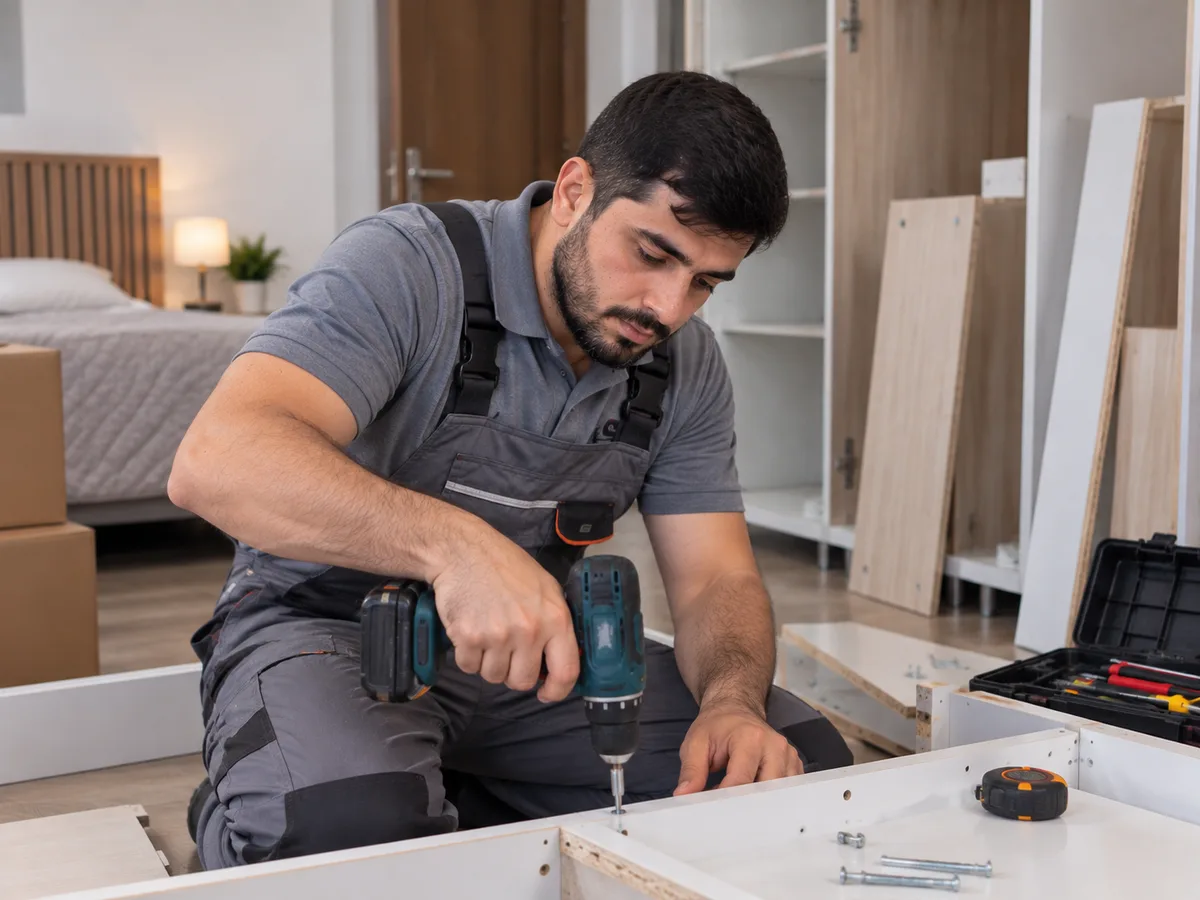
When moving to a new home or office, it is not always possible to transport large furniture in one piece. To safely move wardrobes, beds, tables, and other furniture, they may first need to be properly disassembled and then reassembled at the new location.
Furniture disassembly involves more than simply removing screws. It is important to consider the order in which the parts are removed and how they will be reassembled later.
The first step is to inspect the furniture's construction. Determine how the doors, shelves, drawers, back panel, legs, and main frame are connected and secured.
When disassembling wardrobes, removing the internal shelves and drawers first can make the process easier. The doors and main frame components can then be removed.
It is important not to lose hinges, screws, minifix fittings, and other furniture fasteners. Small components can be packed separately and labeled according to the part of the furniture they belong to.
During transportation, disassembled panels may rub against each other, causing scratches and damage to MDF, chipboard, and other surfaces. For this reason, the parts should be packed using suitable protective materials.
Special care should be taken when transporting furniture with mirrors, glass, or decorative elements. These components should be protected separately and secured against impact.
When disassembling a bed, the headboard, side panels, base, and lifting mechanism connections, if present, should be removed in the correct order.
Lifting mechanisms, gas struts, and other moving components should be disassembled according to their technical design. Incorrect handling may damage the mechanism.
Removing the legs and connecting parts from tables, dressers, and other furniture can help reduce the space required during transportation and lower the risk of damage.
Once the furniture has been delivered to the new location, it is important to assemble the components in the correct order during reassembly. An incorrectly aligned frame can later cause doors to close improperly and drawers to malfunction.
After a wardrobe has been assembled, the door hinges may need adjustment. There should be even gaps between the doors, they should not rub against each other, and they should open and close smoothly.
Drawer slides should also be installed in the correct direction and at the same level. Otherwise, the drawer may be difficult to move or may not close completely.
If furniture has been disassembled and reassembled several times, some screw holes may become loose. The condition of the fastening points should be carefully checked, especially in chipboard and MDF furniture.
If a screw hole no longer holds the screw securely, simply using a larger screw is not always the correct solution. The fastening point may need to be repaired using a method suitable for the furniture material.
Large wardrobes should also be checked for proper leveling after reassembly. An uneven floor can cause the furniture to stand incorrectly and may result in doors opening or closing on their own.
Tall and heavy furniture designed to be secured to a wall should be safely anchored using suitable fasteners after installation is complete.
Some furniture with a simple construction can be disassembled and reassembled by the user. However, large wardrobes, beds with lifting mechanisms, glass furniture, and complex structures require additional care.
A professional furniture technician can disassemble furniture according to its construction, safely prepare the components for transportation, and correctly reassemble them at the new location.
Proper disassembly and reassembly reduce the risk of furniture damage during transportation, help maintain the strength of the connections, and ensure that the furniture can be used comfortably at its new location.