
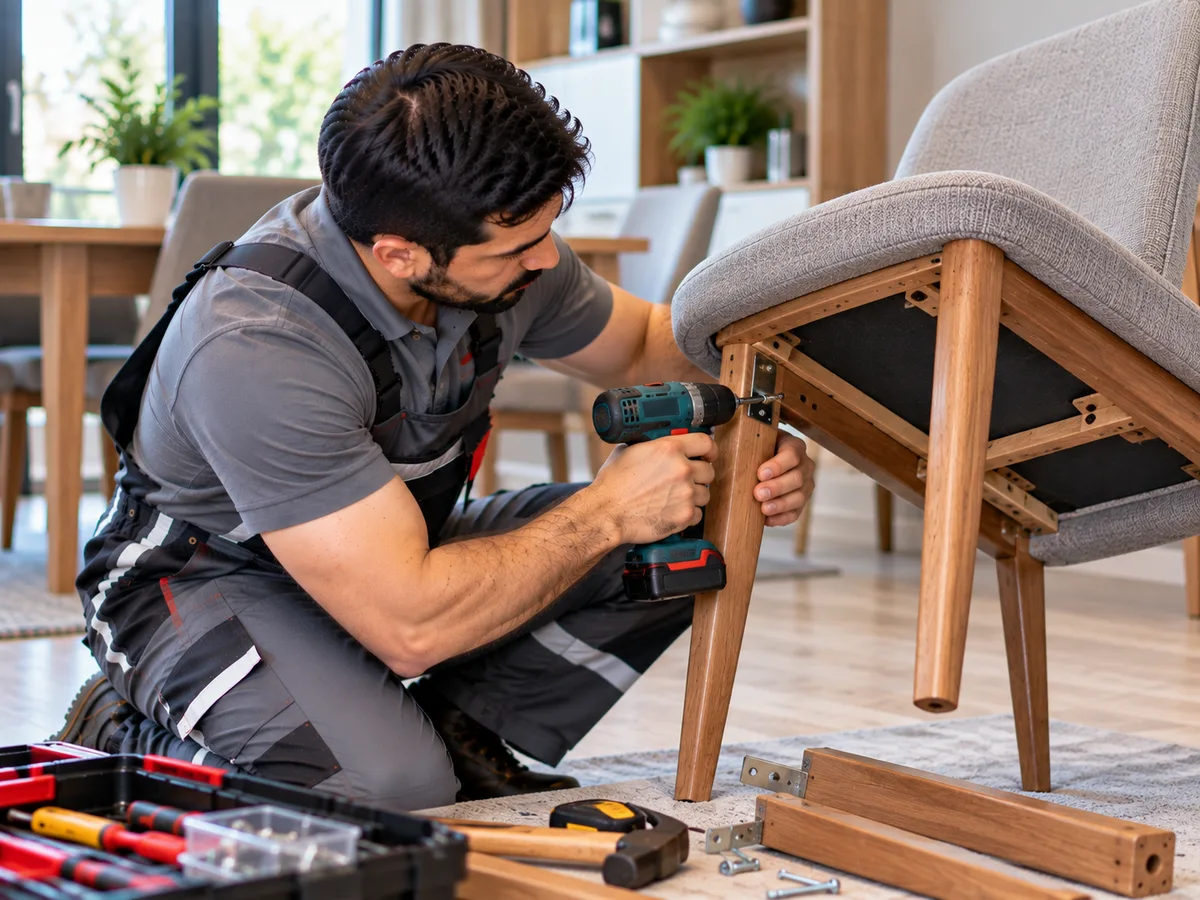
Chairs are among the pieces of furniture that are exposed to the most stress during everyday use. Long-term use, excessive weight, impacts, moisture, and loosened joints can cause various problems with the chair legs, seat, and frame.
During chair repair, it is important not only to fix the visible damage but also to inspect the overall structure of the furniture and its connection points. A loose joint in one area can eventually cause damage to other parts.
One of the most common problems is a wobbly chair. If the chair moves or rocks while standing on a level surface, the cause may be uneven legs, loose joints, or deformation of the frame.
On wooden chairs, the legs are usually attached to the frame using glue, screws, dowels, or special joints. Over time, these connections can become loose, making the chair unstable.
Simply securing a loose leg with an additional screw is not always the correct solution. The condition of the existing joint, the strength of the wood, and any damage to the attachment point should first be inspected.
When a chair leg is broken, the appropriate repair method depends on the location of the break and the material. Some damage to wooden legs can be repaired by gluing and adding reinforcement.
If the leg is severely damaged at the joint or the wood has lost its strength, replacing the damaged part may be a more reliable solution.
For chairs with metal legs, the problem may be related to broken welds, bent metal, loose screws, or damaged fastening components.
Another common problem is a loose or sagging seat. On chairs with padded seats, the foam may lose its shape, the supporting base may break, or the upholstery may wear out, reducing comfort.
When repairing the seat, the lower frame, wooden base, foam, and upholstery should be inspected separately. If the problem is limited to the foam, it can be replaced with new material of the appropriate density and thickness.
If the wooden or plywood base underneath the seat is cracked, simply replacing the upholstery will not solve the problem. The supporting section should first be repaired or replaced.
A loose chair frame is especially common in older wooden chairs. The joints between the backrest, legs, and seat can loosen over time.
In such cases, the chair joints should be inspected. If necessary, the components can be separated, old glue residue removed, and the parts secured again using suitable furniture glue.
If the frame is loose at several points at the same time, reinforcing only one section may not be sufficient. The balance and structural strength of the entire chair should be checked.
A loose chair backrest is another issue that requires attention for safety reasons. If the joints holding the backrest become weak, the backrest may completely separate during use.
When repairing the backrest, the joints, screws, dowels, and frame should be checked for cracks and other damage.
On some chairs, screws become loose over time. Simply tightening the screw again may provide only a temporary solution. If the screw hole has widened and the screw no longer holds securely, the fastening point will need to be repaired.
Cracks in wooden chairs are also common. If a small crack is not repaired in time, it may expand during use and eventually cause the component to break completely.
Moisture can also negatively affect wooden furniture. Swelling, drying, and deformation of the wood can loosen joints and affect the stability of the chair.
If the chair surface has scratches, discoloration, or damaged varnish, surface restoration can be carried out along with structural repairs.
Depending on the condition of the surface, the old finish can be removed, damaged areas smoothed, and suitable paint, varnish, or a protective coating applied.
On upholstered chairs, torn or worn upholstery may also require repair. When selecting new upholstery, both appearance and the material's durability and suitability for everyday use should be considered.
It is important that the materials used during chair repair are compatible with the existing structure. Incorrect screws, low-quality glue, or unsuitable wooden components can reduce the durability of the repair.
Repairs to load-bearing legs and the frame are particularly important because these components directly affect the safety of the chair. After restoration, the chair's stability and performance under load should be checked.
In some cases, repairing an old chair may be more practical than purchasing a new one. Chairs made from high-quality wood with a sound main structure can continue to be used for many years after proper restoration.
However, if a large part of the frame has rotted, several load-bearing components are seriously damaged, or the material has lost its structural strength, the feasibility of repair should be evaluated individually.
During a chair repair assessment, the legs, seat, backrest, frame, joints, screws, dowels, and upholstery components should be inspected step by step.
A professional furniture repair technician can inspect the chair's structure, determine which components can be restored, identify which parts need replacement, and select the appropriate repair method.
Proper chair repair can eliminate wobbling, loose joints, broken components, and seat problems while improving safety and extending the useful life of the furniture.