
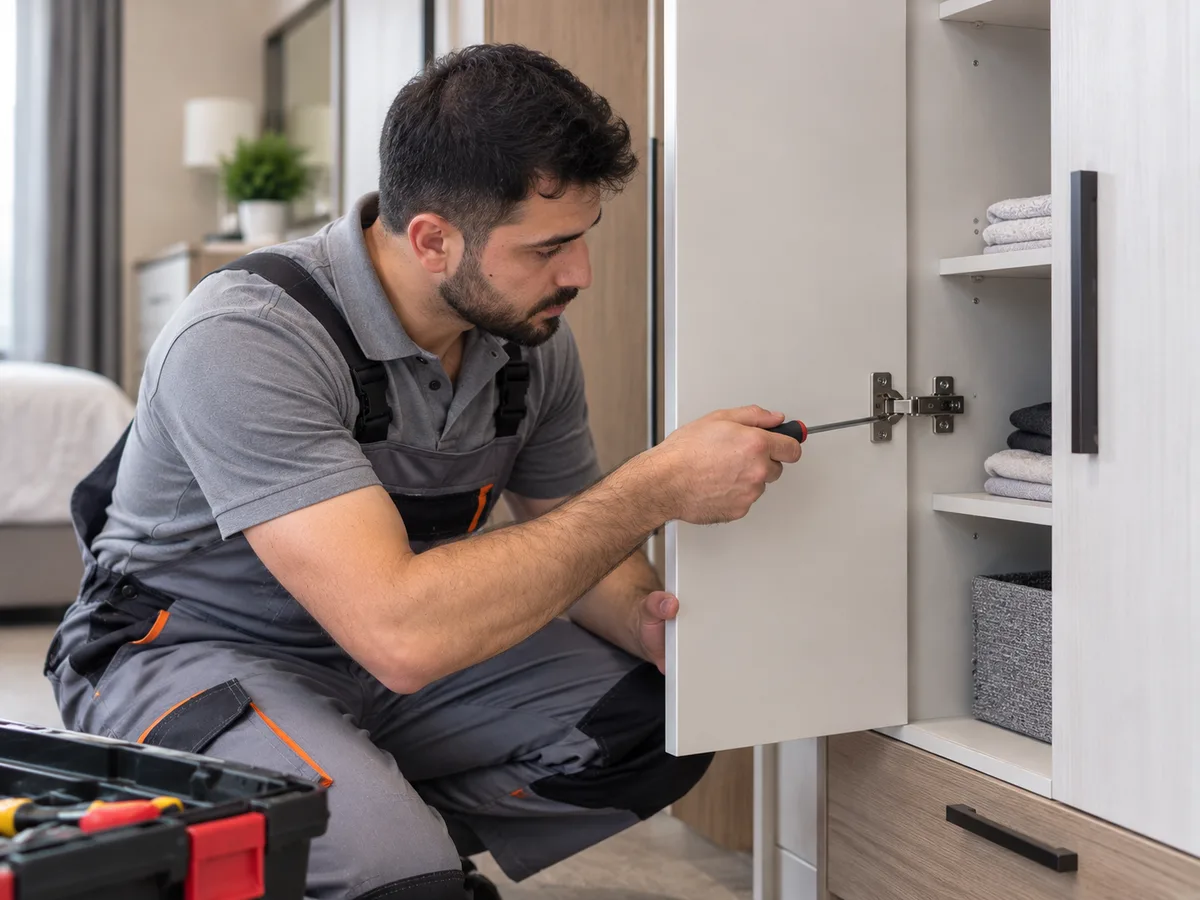
A cabinet door that does not close properly is a common problem with kitchen, bedroom, and other types of furniture. The door may remain slightly open, sit unevenly, or rub against other parts of the cabinet when closing.
One of the most common causes is incorrect hinge adjustment. Furniture hinges usually have adjustment screws that allow the door position to be changed from side to side, up and down, and forward or backward.
When hinge screws become loose over time, the door may begin to sag. As a result, the edge of the door may rub against another door or the cabinet frame, preventing it from closing properly.
If the problem is caused only by loose screws, tightening them correctly and readjusting the hinges may be enough.
However, overtightening the screws is also not recommended. Especially with MDF and particleboard materials, the screw holes can become damaged, weakening the hinge connection to the cabinet.
If the hinge itself is damaged, adjustment alone may not solve the problem. A bent, broken, or excessively loose hinge may need to be replaced.
If the cabinet door has sagged, all hinges should be checked together. Adjusting only one hinge may not be enough to align the door correctly.
In some cases, the screw holes holding the hinge become enlarged, and the screws can no longer grip the material securely. In this situation, the mounting point may need to be repaired.
Another reason the door may not close properly is misalignment of the cabinet frame. If the furniture is standing on an uneven surface, the cabinet frame may become slightly distorted, affecting the alignment of the doors.
Moisture should also be considered with kitchen cabinets. MDF and other wood-based materials can swell or deform after prolonged exposure to water and humidity.
If the door has swollen or warped, hinge adjustment alone may not completely solve the problem.
If the cabinet has several doors, it is also important that the gaps between them are even. Incorrect adjustment of one door may interfere with the opening and closing of another.
During the initial inspection, check whether the hinges are loose, where the door is rubbing, and whether the screws are securely fixed in the material.
If the hinges are in good condition, proper adjustment can restore the correct position of the door. If the hinge or mounting point is damaged, the affected part may need to be repaired or replaced.
If the cabinet door repeatedly sags, the hinge pulls out of its mounting point, the doors rub against each other, or the MDF/particleboard is damaged, it is advisable to have the furniture inspected by a professional furniture repair technician.
Proper diagnosis and adjustment can restore smooth opening and closing while helping prevent further damage to the hinges and cabinet structure.